

Beyond Relatability: Building for Resonance
The Cécred launch showed us: proof speaks louder than performance.

Studio Note: Talking Shop Over Iced Lattes
Everywhere we look, people are building in public — brands, platforms, communities, creative projects, personal influence. And no matter the form, the question humming underneath is the same: how do you connect with people in a way that lasts?
We ask ourselves that too, every single day as we build TGLM.
That’s what this Studio space is for. Think of it as us catching our breath in the middle of the workday — iced lattes sweating on the table, tabs open on our screens — reflecting on what we’ve seen, what we’ve tried, what it’s teaching us about building with intention.
It’s not about critique. It’s about clarity. It’s about noticing the currents that carry us forward or hold us back, asking the honest questions, and sharing the lessons that might help all of us — founders, creatives, influencers, and builders alike — create work that doesn’t just catch attention, but stays with people long after the scroll.
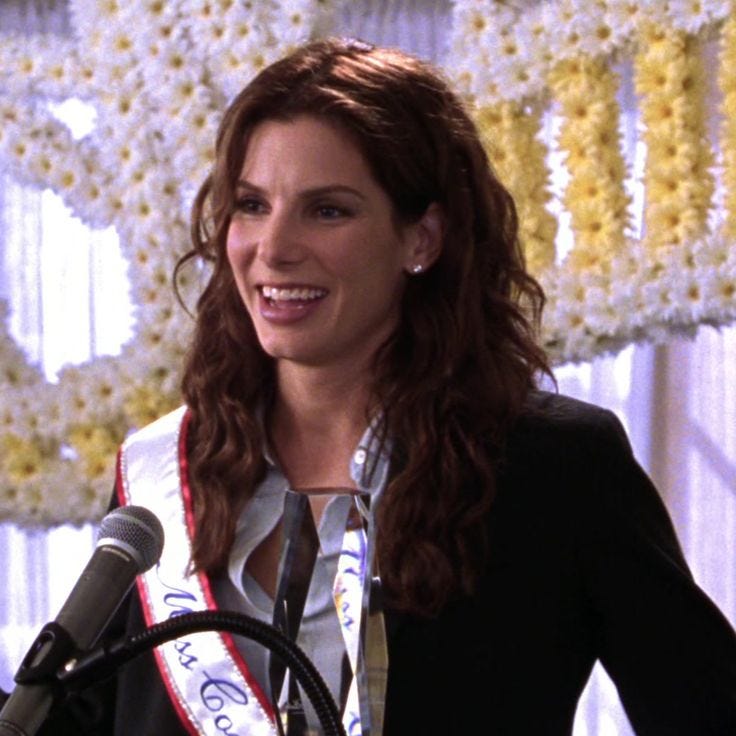
Meet Relatability
She’s the first friend you make in a new room. Quick with the joke, warm with the nod, irresistible in her charm. She’s Ms. Congeniality — everybody’s favorite.
Relatability marketing is the art of performing sameness. It’s the “we’re just like you” posture that makes people lean in: the meme that nails the mood, the behind-the-scenes clip that feels like a peek into your own day, the campaign that flattens the distance between company and consumer.
And it worked — for all of us. For audiences, it was recognition we’d been craving. For those of us rarely reflected in media, relatability felt like an invitation. For creators, it was a reliable spark — the meme that always hit, the caption that always got shared.
Some of our earliest TGLM carousels thrived because of her. Relatability gave us the thrill of the “I feel seen” moment — short, punchy lines about girlhood and ambition that you’d screenshot and text to your best friend.
But here’s what we learned: relatability spikes engagement, but it doesn’t always deepen connection. It gives the smile, the nod, the repost — but not always the resonance that lingers when the screen is off.
So we started asking: what happens after the pull?
Relatability’s Hidden Cost
Relatability is comfortable. It’s flattering. But it can become a trap.
When the bond is built only on sameness, growth feels like betrayal. Audiences begin to guard the version of you that made them feel included, and they demand you stay there. Nostalgia turns into possession: don’t change, don’t leave me behind.
That’s why artists and brands so often meet backlash at their peak. They were celebrated for being “just like us,” until the inevitable happened — circumstances shifted, access changed, life expanded. And suddenly, applause turned to critique: you’ve changed.
You’ve seen it happen:
The influencer who goes from thrift hauls to luxury bags, and suddenly she’s “out of touch.”
The founder who sells the business she built from her living room, and now she’s “a sellout.”
The artist who goes on a weight-loss journey, and fans accuse her of “shifting away from who they first connected with.”
That’s the cost of relying only on relatability marketing. It promises belonging, but at the price of evolution. It can keep you replaying a past self, long after you’ve grown beyond her.
The only way forward is to step out of the golden cage. To trust that letting go of some hands makes space for others. To accept that evolution doesn’t erase the bond — it refines it.

Resonance Enters the Chat
Resonance marketing is quieter. Slower. Less show, more staying power. She doesn’t need to prove she belongs because she already knows her ground.
Resonance marketing is emotional alignment. It doesn’t mimic your life; it carries truth, quality, and cultural meaning in a way that makes you pause.
Think Cécred. Launched in 2024 to early critiques that Beyoncé was “too private” to sell haircare, it skipped the relatability playbook. No counter-top routines. No livestreams. No founder oversharing to prove her accessibility. Instead: receipts. Patent-pending Bioactive Keratin Ferment technology that repaired hair at a molecular level.
And then the reviews came in. Customers used the products, saw their hair strengthen and shine, and the word spread. The quality itself became the marketing. What sold the brand wasn’t Beyoncé posting like a “relatable” founder — it was proof.
By 2025, Cécred was a multiple award-winning haircare brand, named one of the most powerful in beauty, with its Restoring Hair & Edge Drops selling every 16 seconds. Reviews and testimonials carried it further than any scripted performance — people sharing results, passing along their own before-and-after stories, creating the ripple effect.
That’s resonance: when results outlast the noise, when skepticism breaks into trust, and quality itself becomes the campaign.
Think Dove’s Real Beauty campaign in 2004. It didn’t just show different faces; it asked a bigger cultural question: what does real beauty even mean? The answer outlived the ad cycle because people kept sharing how it made them feel — proud, seen, affirmed in their own skin. Two decades later, the echo remains.
Relatability marketing gathers you in. Resonance marketing keeps you.
Relatability vs. Resonance
Relatability marketing walks in first, grinning: “See? I’m just like you. We share the same jokes, the same annoyances, the same little indulgences. Twinsies.”
Resonance marketing doesn’t compete. She answers calmly: “I don’t need to be your twin. I’m here to meet you where it matters.”
Relatability is recognition — the wink that stops the scroll.
Resonance is alignment — the deeper chord that follows you into tomorrow.
Both matter. But only resonance builds roots.
Quality Is the Root
Here’s the thing: resonance marketing and relatability marketing are strategies. Neither survives without quality.
Quality is the root — the quiet power that keeps trust alive. A campaign can be witty, emotional, even groundbreaking, but if the product doesn’t hold up, the bond collapses.
You can’t meme your way into loyalty. You can’t inspire your way out of disappointment.
Quality is what people carry back into their own lives. It shows up in the way a moisturizer actually changes someone’s skin, in how a dress lasts season after season, in how a film still makes them cry years later.
In the end, what sells isn’t the clever line — it’s the lived review. The proof that turns curiosity into loyalty, and loyalty into legacy.
Vision Is the Seed
But for founders, for artists, for creators — quality alone isn’t enough. What sustains you is vision.
Because here’s the truth: people are fickle. Hype fades. Algorithms shift. They outgrow your work. They copy it. They turn on you for daring to evolve.
If your fuel is external — connection, applause, the numbers — every shift will make you question where you’re headed. But if your fuel is vision — learning your work, growing your work, knowing your work — then you’ll outlast all of it.
Vision is the invisible scaffolding that holds when the applause doesn’t come. It’s the part that can’t be replicated because it isn’t performative; it’s lived.
Quality sustains the product. Vision sustains the builder. And without the builder, nothing lasts.

Final Lesson: Holding the Vision
So, why say all this? Because relatability and resonance are tools. Useful, but not the whole story.
The real question is still the one we started with: how do you connect in a way that lasts?
In a culture addicted to speed — launch fast, trend faster, monetize immediately — it’s easy to build for the wave. And waves feel good, until they end.
That’s where vision becomes the anchor. It tells you when to expand, when to retreat, when to pause. It reminds you of your why when the market screams for your attention.
Relatability will pull people in. Resonance will keep them close. Quality will hold their trust. But only vision — rooted in authenticity, alignment, and lived purpose — can carry you through change.
And vision takes time. It takes patience in the uncertainty, faith in the testing, courage to keep shaping the work until it finally reflects you.
Because audiences will grow and outgrow. But what remains is your intent — proven not by what you say, but by what people experience when they meet your work in their own lives.
For us at TGLM, that intent is steady: to make people more self-aware, to help them feel good, and to remind them that joy is allowed. That’s the thread in everything we do.
Happy building. 🌱
Introducing The Resonance Map
We created The Resonance Map as a companion to this piece — a guided framework you can return to whenever you want to check in with your work. It isn’t a checklist; it’s a compass.
Inside, you’ll find three stages — Relatability, Resonance, and Vision — each with thoughtful questions, grounding reminders, and anchor points to guide your next step. It’s designed to help you see where you are now, what’s fueling you, and how to root into what lasts.
As a subscriber, your free copy of The Resonance Map is ready.
Download below.